
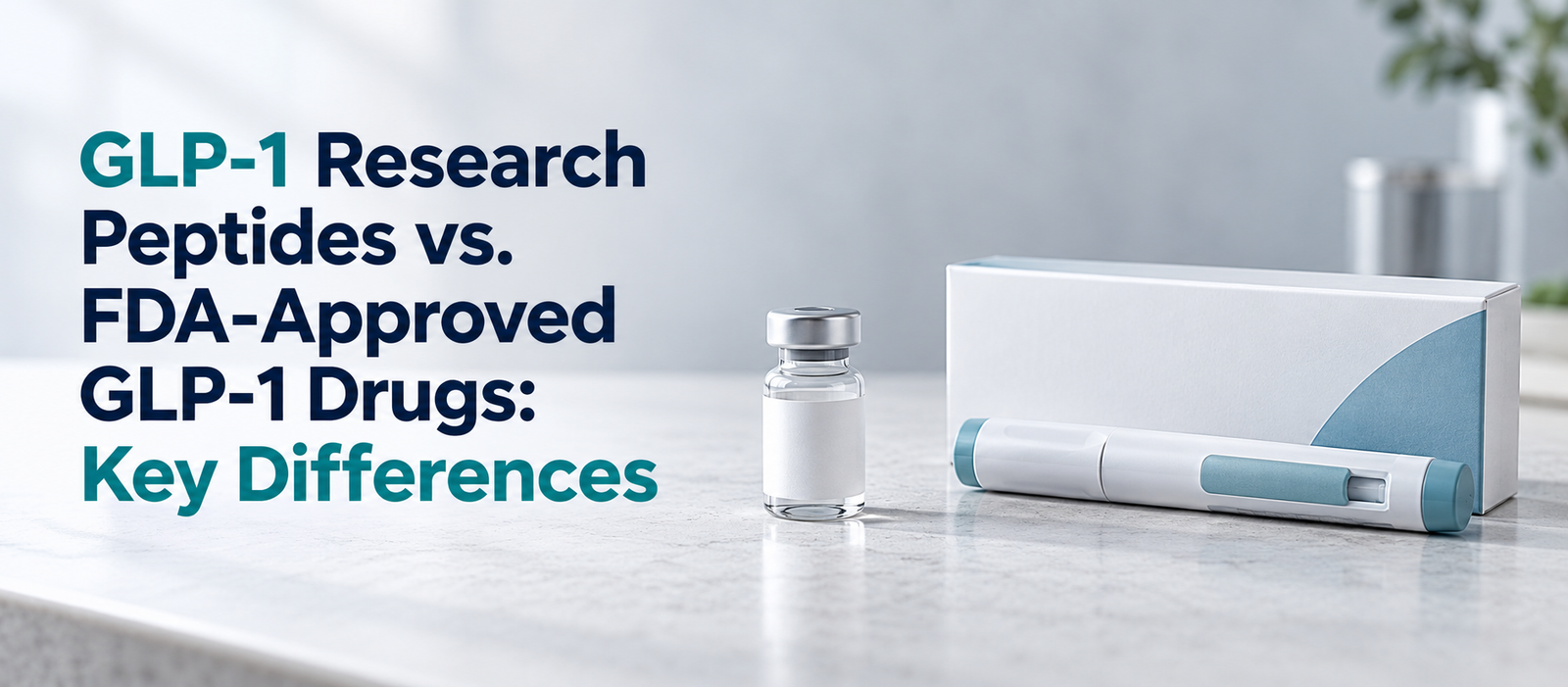
You are not alone if you have ever thought about whether GLP-1 research peptides are simply another version of medications like Ozempic or Mounjaro. They share the same scientific roots, but they serve very different purposes.
FDA-approved GLP-1 drugs are authorized for specific medical uses. Research peptides are investigated in laboratory and scientific research to study biological pathways and possible therapeutic applications.
This difference helps to easily understand peptide-related information.
How Do GLP-1 Drugs Work?
GLP-1 drugs work through pathways related to the natural hormone GLP-1 and can affect blood glucose, appetite, and gastric emptying. They:
- Reduce appetite
- Slow stomach emptying
- Support insulin release
These effects have been studied in clinical trials involving people with type 2 diabetes and obesity. These effects are supported by clinical trials in treatment of obesity and type 2 diabetes.
What Do GLP 1 Research Peptides Offer?
GLP-1 research peptides, unlike FDA-approved GLP-1 drugs, are studied to advance scientific research. Researchers may study these peptides to better understand insulin signaling, metabolism, energy regulation, and related biological pathways. This research may contribute to future therapeutic development.
Products marketed as GLP-1 research peptides are generally investigational and are not intended for routine human use unless specifically authorized by the relevant regulatory authorities.
GLP-1 Research Peptides vs. FDA-Approved GLP-1 Drugs
| Peptide Therapy | FDA Approved GLP 1 Drugs |
|---|---|
| Studied for biological effects | Approved for specific medical uses |
| Used in laboratory research | Used as prescription medicines |
| Studied for metabolism and glucose regulation | Used for glucose control and weight management |
| Investigated for different metabolic pathways | Target specific approved pathways |
| Long-term effects require further study | Weight may return after stopping treatment |
| Studied in research settings | Used in appropriate patients |
| Mainly supported by preclinical research | Supported by clinical trials |
What Are the Limitations of GLP-1-Based Drugs?
Although GLP-1-based medicines can support weight management in appropriate patients, they are not intended to address every aspect of metabolic health. Long-term weight and metabolic health may also involve lifestyle changes and ongoing medical management. For this reason, researchers continue to study additional pathways involved in metabolism, body composition, and cellular function.
The Bottom Line
GLP-1 drugs and peptide therapy should not be considered as competitors. They represent different stages of metabolic health. FDA-approved GLP-1 drugs play an established role in patient care. While research peptides continue to expand scientific knowledge and may help shape future therapeutic innovations. Understanding this difference allows readers to evaluate emerging research and appreciate the evolving role of peptide science in a better way.
Disclaimer: Disclaimer: This information is provided only for educational and scientific purposes. Products marketed as research peptides are intended for laboratory research and should not be used in humans unless specifically authorized by the relevant regulatory authorities. This article does not recommend the use or purchase of any research peptide for medical purposes.
References
- American Diabetes Association Professional Practice Committee. (2025). Standards of care in diabetes—2025. Diabetes Care, 48(Supplement_1). https://doi.org/10.2337/dc25-SINT.
- Jastreboff, A. M., Aronne, L. J., Ahmad, N. N., Wharton, S., Connery, L., Alves, B., Kiyosue, A., Zhang, S., Liu, B., Bunck, M. C., & Stefanski, A. (2022). Tirzepatide once weekly for the treatment of obesity. The New England Journal of Medicine, 387(3), 205–216. https://doi.org/10.1056/NEJMoa2206038.