GLP-1 peptides play an important role in regulating blood sugar, appetite, and digestion. Natural GLP-1 is broken down very quickly in the body, which limits its duration of action. This limits their stability and duration of action. Therefore, researchers are studying ways to develop more stable GLP-1-based molecules.
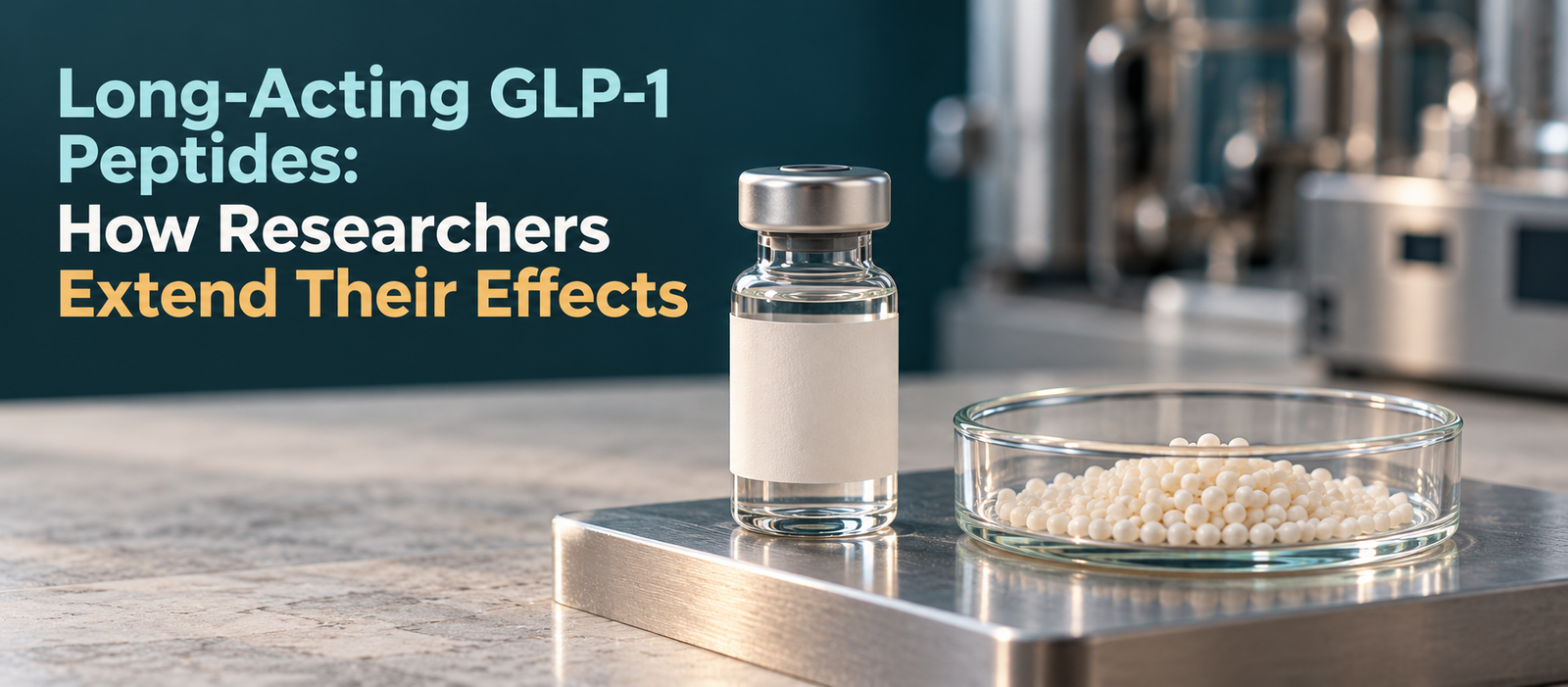
Researchers are developing long-acting GLP-1-based molecules to extend their duration of action.
Why Is It Needed?
GLP-1 peptides are broken down rapidly in the body by an enzyme called DPP-4. Researchers modify GLP-1-based molecules to achieve:
- Longer action
- Fewer doses
- Sustained GLP-1 activity
How Researchers Extend Their Effects?
| Strategies | Results |
|---|---|
| Change in amino acids | Helps to resist breakdown of DPP-4 enzyme |
| Modification of fatty acids | Helps to prolong their circulation |
| Binding with protein | Helps to slow removal of peptides from body |
These modifications can extend the duration of action of GLP-1-based molecules.
Effects Lasts From Minutes To Days
| GLP-1 peptide form | Half life (approximate) |
|---|---|
| Natural | 1-2 minutes |
| Liraglutide | 13 hours |
| Semaglutide | 1 week |
This difference in half-life helps explain why some GLP-1-based drugs can be administered daily or weekly.
Benefits And Future
Long-acting GLP-1-based molecules may offer:
- Long lasting effects
- Less frequent dosing
- Greater convenience
- Potentially better adherence
The Takeaway
Researchers are not only studying the activity of GLP-1-based molecules. They are also developing ways to extend their duration of action. These approaches have helped develop GLP-1-based molecules with activity lasting much longer than natural GLP-1.
Disclaimer: This information is provided only for educational and scientific purposes. The information about GLP-1-based molecules does not constitute medical advice or a recommendation for treatment. Research peptides are not approved for human use unless authorized by the relevant regulatory authorities.
References
- Holst, J. J. (2024). GLP-1 physiology in obesity and development of incretin-based drugs for chronic weight management. Nature Metabolism, 6(10), 1866–1885. https://doi.org/10.1038/s42255-024-01113-9
- Liu, Q. K. (2024). Mechanisms of action and therapeutic applications of GLP-1 and dual GIP/GLP-1 receptor agonists. Frontiers in Endocrinology, 15, 1431292. https://doi.org/10.3389/fendo.2024.1431292
- Zheng, Z., Zong, Y., Ma, Y., et al. (2024). Glucagon-like peptide-1 receptor: Mechanisms and advances in therapy. Signal Transduction and Targeted Therapy, 9, 234. https://doi.org/10.1038/s41392-024-01931-z