Tissue repair is a complex biological process involving inflammation, angiogenesis, extracellular matrix remodeling, and cellular responses. Researchers are investigating different experimental compounds to better understand these processes.
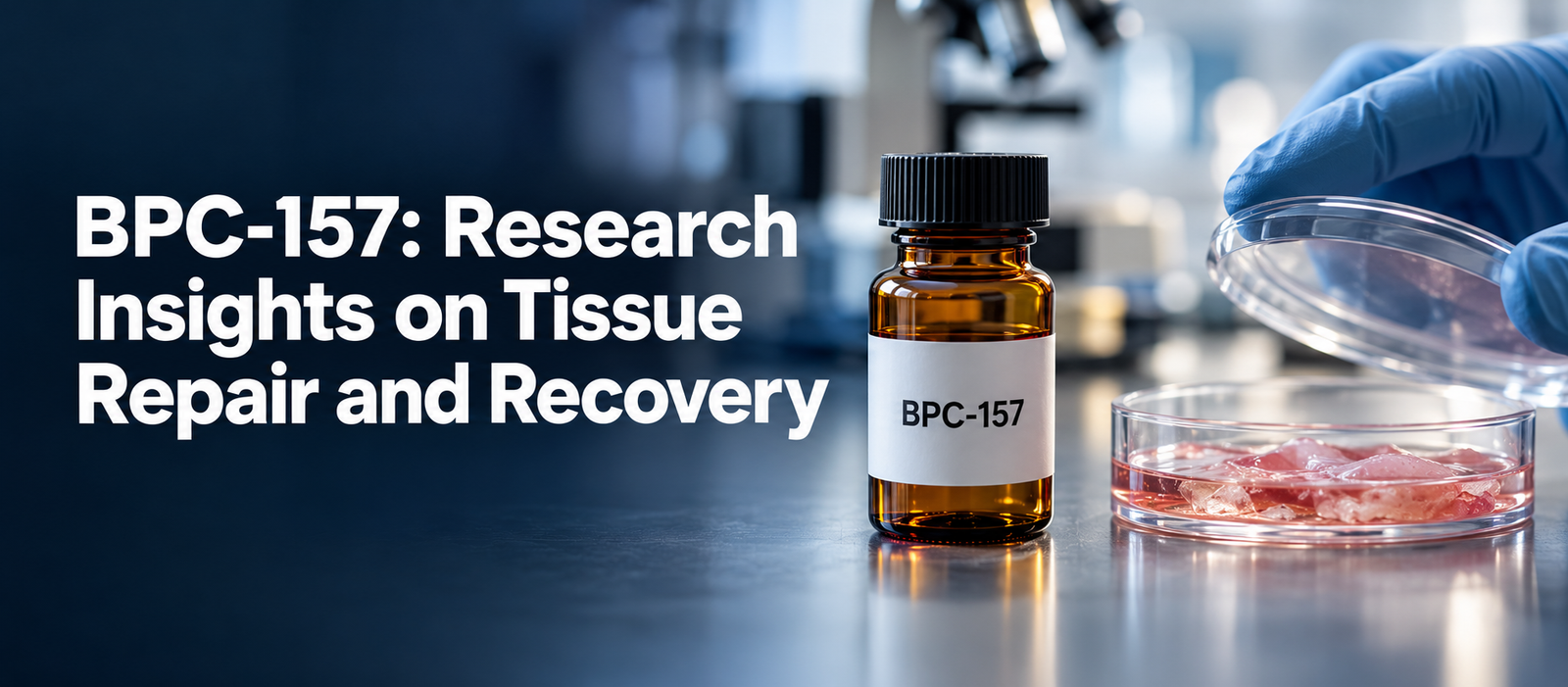
BPC-157 (Body Protective Compound-157) has attracted growing research interest because preclinical studies have reported effects on several biological pathways involved in tissue repair. However, much of the available evidence comes from animal and experimental models, and its clinical efficacy and safety in humans remain insufficiently established.
What is BPC-157
BPC-157 is a synthetic peptide. It is derived from natural protein found in the stomach. There are a number of studies that determine the effects of BPC-157 on regenerative processes. Preclinical research suggests that BPC-157 may influence biological processes involving angiogenesis, inflammatory signaling, collagen-related tissue repair, and nitric oxide pathways.
How is BPC 157 being studied?
1.Observed Effects on Tissue Repair
Preclinical research has investigated the potential effects of BPC-157 on tissue repair, including:
- Repair of tendons & ligaments
- Alignment of Collagen fiber
- Regeneration of Skeletal muscle
Gwyer, D., Wragg, N. M., & Wilson, S. L. (2019)
2.Effects on Recovery Pathways
Animal studies have investigated the potential effects of BPC-157 on muscle and tendon recovery, including:
- Recover muscles
- Heal Tendons
- Provides inflammatory responses
(Sikiric, Seiwerth, Rucman, Turkovic, 2011)
3. Effects on Healing pathways
Preclinical studies show that BPC-157 affects a number of healing pathways:
- Collagen synthesis
- Nitric oxide signaling
- Inflammation regulation
What Makes BPC 157 Different?
BPC-157 has attracted research interest because preclinical studies have investigated its effects across several biological pathways involved in tissue repair. However, these findings should not be interpreted as evidence that BPC-157 is superior to established recovery or medical treatments. Current preclinical research suggests that BPC-157 has become one of the most extensively studied regenerative peptides.
| BPC-157 | Established Recovery Approaches |
|---|---|
| Investigated for Support of several healing pathways simultaneously | Generally, ease symptoms only rather than support tissue repair |
| Researched for its simultaneous role in tissue repair, collagen organization, angiogenesis, regulation of inflammation regulation and soft tissue recovery | Usually help with one specific issue |
Final thoughts
Preclinical studies have reported effects of BPC-157 across several experimental models of tissue injury and repair. However, the available evidence is predominantly preclinical, and human clinical data remain limited. Further well-controlled clinical studies are needed to establish its safety, efficacy, pharmacokinetics, and potential therapeutic applications.
Disclaimer: BPC 157 is currently an investigational peptide. It has not been approved by the U.S. FDA for routine clinical use. This article is intended for educational and research purposes only and should not be considered medical advice or a recommendation for treatment.
References
Gwyer, D., et al. (2019). Gastric pentadecapeptide body protection compound BPC 157 and its role in accelerating musculoskeletal soft tissue healing. Cell and Tissue Research, 377(2), 153–159. https://doi.org/10.1007/s00441-019-03016-8
Sikiric, P., et al. (2011). Stable gastric pentadecapeptide BPC 157: Novel therapy in gastrointestinal tract. Current Pharmaceutical Design, 17(16), 1612–1632. https://doi.org/10.2174/138161211796196954
Starešinić, M., et al. (2022). Stable gastric pentadecapeptide BPC 157 and striated, smooth, and heart muscle. Biomedicines, 10(12), 3221. https://doi.org/10.3390/biomedicines10123221